

By Derek Nguyen · Editor
Published · Updated
Answer in brief
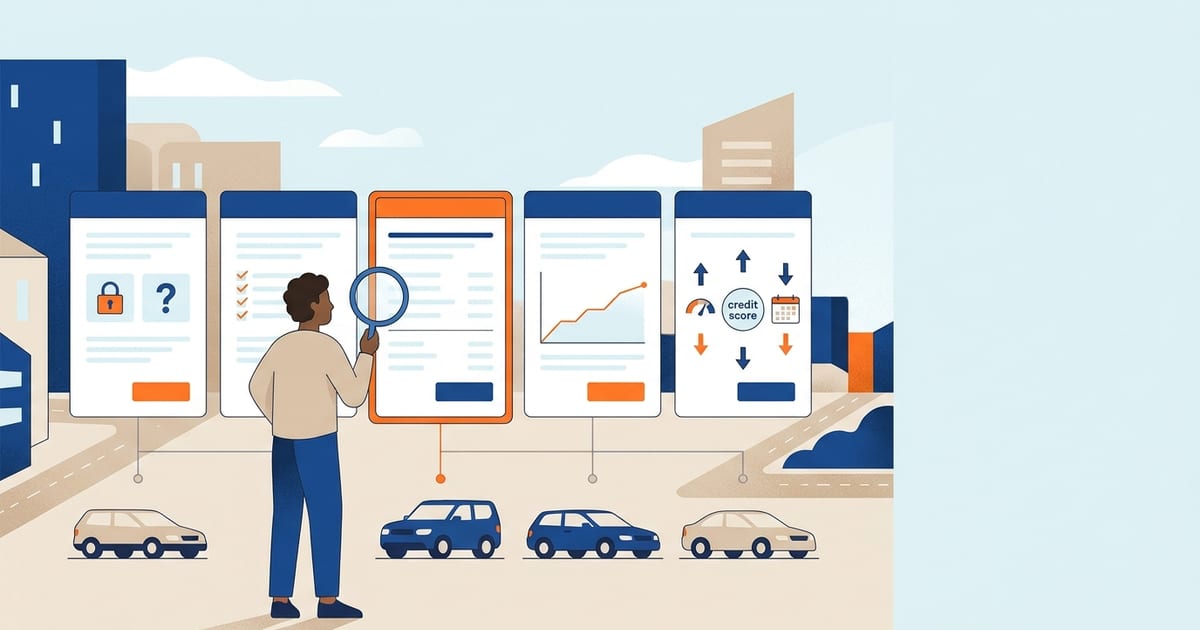
For credit-sensitive drivers the standard comparison method has two additions: cast a wider net—at least five quotes including non-standard and usage-based options, because credit models differ so sharply—and ask each insurer directly how credit is used and whether they re-rate on improvement. Fix the coverage set, keep inputs identical, add fees, and time the comparison after any credit improvement so the new score is what gets pulled. Quotes are soft inquiries and cost nothing on your credit.
- 1
Check your credit first
Pull your free reports, dispute errors and pay down utilisation before you shop, so the score insurers pull is your best current one. See improving your score.
- 2
Fix the coverage
One set of limits and deductibles for every quote.
- 3
Standardise inputs
Same drivers, vehicles, address, mileage.
- 4
Get five or more quotes
Mainstream, non-standard and usage-based. A comparison tool reaches several at once.
- 5
Ask about credit
Used? How heavily? Re-rate on improvement? Life-circumstance exceptions?
- 6
Normalise
Annual total including fees.
- 7
Switch without a gap
New policy starts the day the old one ends; a lapse is its own surcharge.
Why five, not three
For most drivers three quotes capture most of the spread. For poor-credit drivers the spread is wider and more random—the same person is a mid-tier risk at one insurer and a bottom-tier risk at another—so more quotes find more outliers in your favour.
Quote finder
Find auto insurance quotes that fit your situation
Questions & answers
Will getting many quotes hurt my credit?
No. Insurance quotes are soft inquiries.
Should I wait to improve my credit before shopping?
If you can raise your score meaningfully within a month or two, yes. Otherwise shop now and re-compare after.
Is a non-standard insurer the best choice for bad credit?
Not necessarily. Compare total premiums across all types.
Terms used in this guide
- Soft inquiry
- A credit-report pull that does not affect your credit score and is not visible to lenders. Insurance quotes use soft inquiries.
- Premium
- The price of a policy, per six or twelve months.
- Deductible
- What you pay before collision or comprehensive pays. Raising it shrinks the premium that credit factors multiply.
Sources and references
Legal figures on this page (minimum limits, filing periods, statutory benefits) are checked against the primary law or the state insurance regulator listed below. Links and figures last verified Nov 2026.
- Credit-based insurance scores (insurance topic) — National Association of Insurance CommissionersState insurance regulatorIn most states insurers may not use a credit score as the sole reason to raise rates or decline, cancel or non-renew; many states require adverse-action notices.
- State chart: use of credit reports/scoring in underwriting — National Association of Insurance Commissioners (2025)State insurance regulatorState-by-state statutory summary; e.g. Massachusetts (auto rates may not be based on credit), Michigan (credit score prohibited, MCL 500.2162), Maryland (credit may rate a new auto policy only).
- Background on: Insurance scoring — Insurance Information InstituteIndependent researchWhat credit-based insurance scores are; Arkansas regulator data showing credit lowered premium on ~57% of auto policies and raised it on ~23%.
- Nine ways to lower your auto insurance costs — Insurance Information InstituteConsumer guidanceShop at least three quotes; raising a deductible from $200 to $500 can cut collision/comprehensive cost 15–30%, $1,000 can save 40%+; drop physical damage on cars worth under 10× the premium; bundling, low-mileage and good-student discounts.
- Consumer insurance information — National Association of Insurance CommissionersConsumer guidancePlain-language guides from the body of state insurance regulators; links to every state's insurance department and complaint process.
- Insurance research and advocacy — Consumer Federation of AmericaConsumer guidanceConsumer-side research on auto insurance pricing, non-driving rating factors and affordability.
- Car insurance — Consumer ReportsConsumer guidanceIndependent testing organisation's guides to comparing policies and insurers.
- Auto insurance basics — United PolicyholdersConsumer guidancePlain-language coverage explanations from a policyholder-advocacy non-profit.
Practical guidance on this page is original editorial work. Cited sources support factual statements and do not endorse this site. Dollar ranges described as typical or illustrative are editorial estimates, not figures from these sources.
Guide
How to Find Auto Insurers That Don't Check Credit
Where to find auto insurers that do not use credit or weight it lightly—non-standard specialists, telematics-first programmes, pay-per-mile insurers—and how to ask.
Guide
Alternatives When Credit Is Raising Your Premium
Options for drivers whose credit is inflating their premium: life-circumstance exceptions, telematics and pay-per-mile, non-standard insurers, coverage changes and timing.
Guide
How Much More Auto Insurance Costs With Bad Credit
Typical premium differences between credit tiers, how the effect compares with tickets and accidents, and how it varies by state and insurer.