

By Alicia Moreno · Research Writer
Published
Answer in brief
Under Michigan law (MCL 500.2111(4)), auto insurers may not use your credit score, postal zone, sex, marital status, home ownership, education or occupation to set premiums. Rates are built instead on driving record, experience, vehicle, mileage and coverage choices.
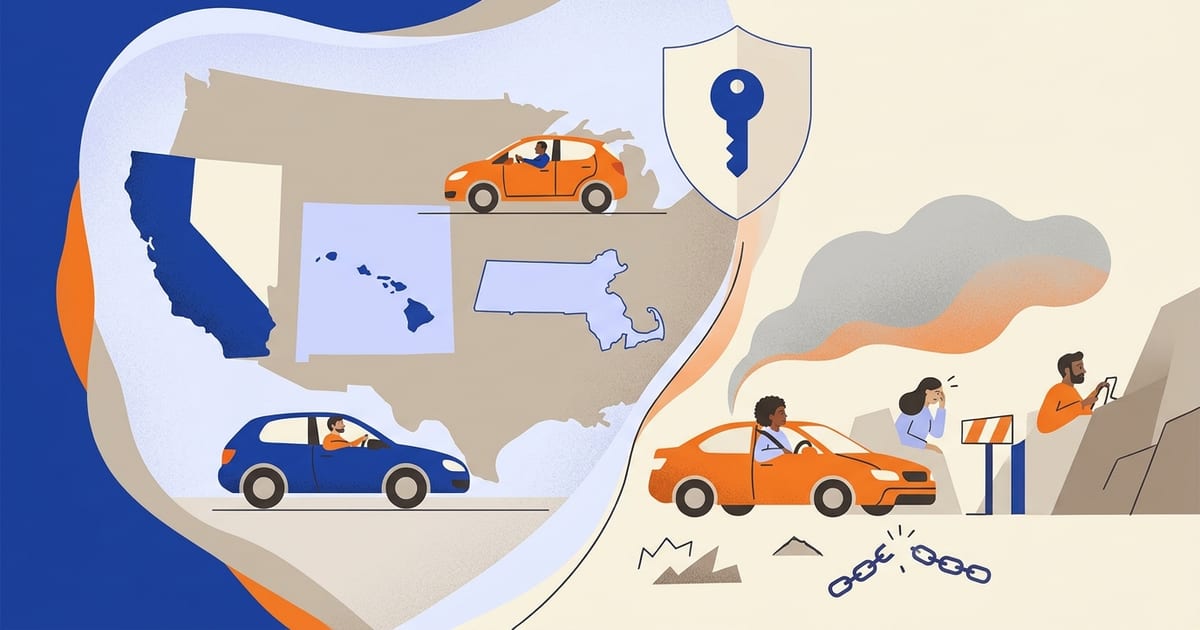
For drivers struggling with poor or thin credit profiles, finding affordable auto insurance often feels difficult. However, Michigan drivers benefit from some of the strongest consumer protections in the country regarding credit scoring in auto insurance.
Michigan Law: MCL 500.2111 and Credit Score Bans
Under the Michigan Insurance Code, specifically MCL 500.2111(4), insurers are legally prohibited from establishing auto insurance rates based on several non-driving demographic variables. The statute establishes clear restrictions to keep auto insurance focused on driving risk rather than consumer debt.
This means whether you have an excellent credit history, a low score, or no credit file whatsoever, Michigan insurers cannot use your credit score to set your auto premium or assign you to a disadvantageous rating tier.
What Determines Auto Insurance Rates in Michigan?
Because state law forbids credit and postal zone evaluations, carriers must calculate rates using other permitted rating factors. Knowing these variables helps you understand what truly drives your policy pricing in the state.
- Driving record: Moving violations, speed infractions, and at-fault collisions directly impact what an insurer charges you.
- Annual mileage and vehicle usage: How far you travel each year and whether your car is used for a long daily commute or pleasure driving.
- Vehicle characteristics: The year, make, model, safety features, and crash repair costs of the automobile you insure.
- Selected coverages and deductibles: Your choices regarding personal injury protection (PIP) medical limits, bodily injury liability levels, and physical damage coverages.
Michigan Rating Factors: Prohibited vs. Permitted
The statutory framework established by MCL 500.2111 creates a strict divide between legal underwriting criteria and prohibited consumer characteristics.
| Rating Category | Prohibited by Michigan Law | Permitted Under State Regulation |
|---|---|---|
| Credit Score | Credit score, as defined in MCL 500.2162 | None (completely banned) |
| Demographics | Sex, marital status, educational level, occupation | Age and driving experience |
| Geography | Postal zone (ZIP code) | Territory as defined without postal zone restrictions |
| Housing | Home ownership status | Garaging location structure |
The Uninsured Driver Dynamic in Michigan
Even with strict protections against credit-based pricing, Michigan remains an expensive auto insurance market due in part to uninsured motorist rates. Research from the Insurance Research Council shows that in 2023, an estimated 22.3% of Michigan motorists were driving without insurance coverage.
Because nearly one in four drivers on the road lacks basic coverage, carrying adequate uninsured motorist coverage and sound liability limits is critical to protecting your household from unexpected crash liabilities.
How Michigan Drivers Can Lower Their Auto Insurance Costs
Without credit scoring to worry about, Michigan motorists can take clear, practical steps to reduce their annual insurance expenses:
- 1
Shop and Compare at Least Three Carriers
Insurers weigh driving records and vehicle types differently. Shopping multiple quotes allows you to locate the carrier offering the best formula for your vehicle.
- 2
Adjust Collision and Comprehensive Deductibles
Increasing your physical damage deductible from $200 to $500 can lower your comprehensive and collision costs by 15% to 30%, while a $1,000 deductible can generate savings of 40% or more.
- 3
Review Physical Damage on Older Vehicles
If your vehicle is worth less than ten times the annual physical damage premium, consider dropping collision and comprehensive coverages to save substantially.
- 4
Take Advantage of Policy Discounts
Inquire about multi-policy bundling discounts, low-mileage driving discounts, and approved student discounts.
Questions & answers
Can auto insurance companies in Michigan check my credit score?
Under MCL 500.2111(4), insurers are legally prohibited from using your credit score to set auto insurance rates or determine eligibility.
Does having bad credit make car insurance more expensive in Michigan?
No. Michigan law bars insurers from using your credit score as a rating factor. The statute does not name every possible scoring model, so review any quote carefully and ask the insurer which factors it used.
Can an insurer in Michigan use my ZIP code to calculate my rate?
No. MCL 500.2111(4) expressly prohibits insurers from using postal zones (ZIP codes) to determine auto insurance rates.
What factors do Michigan auto insurers use instead of credit?
Insurers evaluate permitted rating factors such as your driving safety record, years of driving experience, vehicle type, annual mileage, and coverage options.
Terms: Credit-based insurance score, Rating factor, Rating tier, Premium, Deductible
Sources and references
Legal figures on this page (minimum limits, filing periods, statutory benefits) are checked against the primary law or the state insurance regulator listed below. Links and figures last verified Nov 2026.
- MCL 500.2111 — permitted and prohibited rating factors — Michigan Legislature, MCL 500.2111(4)Primary lawInsurers may not set auto rates on sex, marital status, home ownership, educational level, occupation, postal zone or credit score (as defined in § 2162).
- State chart: use of credit reports/scoring in underwriting — National Association of Insurance Commissioners (2025)State insurance regulatorState-by-state statutory summary; e.g. Massachusetts (auto rates may not be based on credit), Michigan (credit score prohibited, MCL 500.2162), Maryland (credit may rate a new auto policy only).
- Background on: No-fault auto insurance — Insurance Information InstituteIndependent researchWhich states use personal injury protection (PIP), how no-fault thresholds work, and reform history including Michigan and Florida.
- 14 percent of U.S. drivers were uninsured in 2022 — Insurance Research Council (2023)Independent researchAbout one in seven drivers was uninsured in 2022; highest D.C. 25.2%, New Mexico 24.9%, Mississippi 22.2%; lowest Wyoming 5.9%, Maine 6.2%, Idaho 6.2%. Method: ratio of UM to BI claim frequencies.
- Estimated percentage of uninsured motorists by state, 2017–2023 — Insurance Information Institute (2025)Statistical dataIRC time series by state; 2023: Mississippi 28.2%, New Mexico 24.1%, D.C. 23.1%, Michigan 22.3%, Florida 20.6%, California 20.4%, Texas 14.5%; lowest Maine 5.7%.
- Facts + Statistics: Uninsured motorists — Insurance Information Institute (2024)Statistical dataInsurance Research Council estimates of uninsured drivers by state (2022: e.g. Michigan 19.6%, California 17.0%, Florida 15.9%, Texas 13.8%).
- What determines the price of an auto insurance policy? — Insurance Information InstituteConsumer guidanceRating factors: driving record, mileage, location, age, gender, vehicle, credit-based insurance score, coverage choices. Notes ZIP-code rating is prohibited in California and Michigan and gender rating is prohibited in seven states.
- Nine ways to lower your auto insurance costs — Insurance Information InstituteConsumer guidanceShop at least three quotes; raising a deductible from $200 to $500 can cut collision/comprehensive cost 15–30%, $1,000 can save 40%+; drop physical damage on cars worth under 10× the premium; bundling, low-mileage and good-student discounts.
Practical guidance on this page is original editorial work. Cited sources support factual statements and do not endorse this site. Dollar ranges described as typical or illustrative are editorial estimates, not figures from these sources.
Entry
Moving to a State That Bans Credit in Auto Insurance: How Your Rate Changes
Discover what happens to your car insurance premium when moving to a state like California, Michigan, or Massachusetts where credit scoring is prohibited by law.
Parent guide
States That Ban Credit in Auto Insurance
The states where insurers cannot use credit to rate auto insurance—California, Hawaii, Massachusetts—plus Michigan's credit-score ban and the states that restrict it.